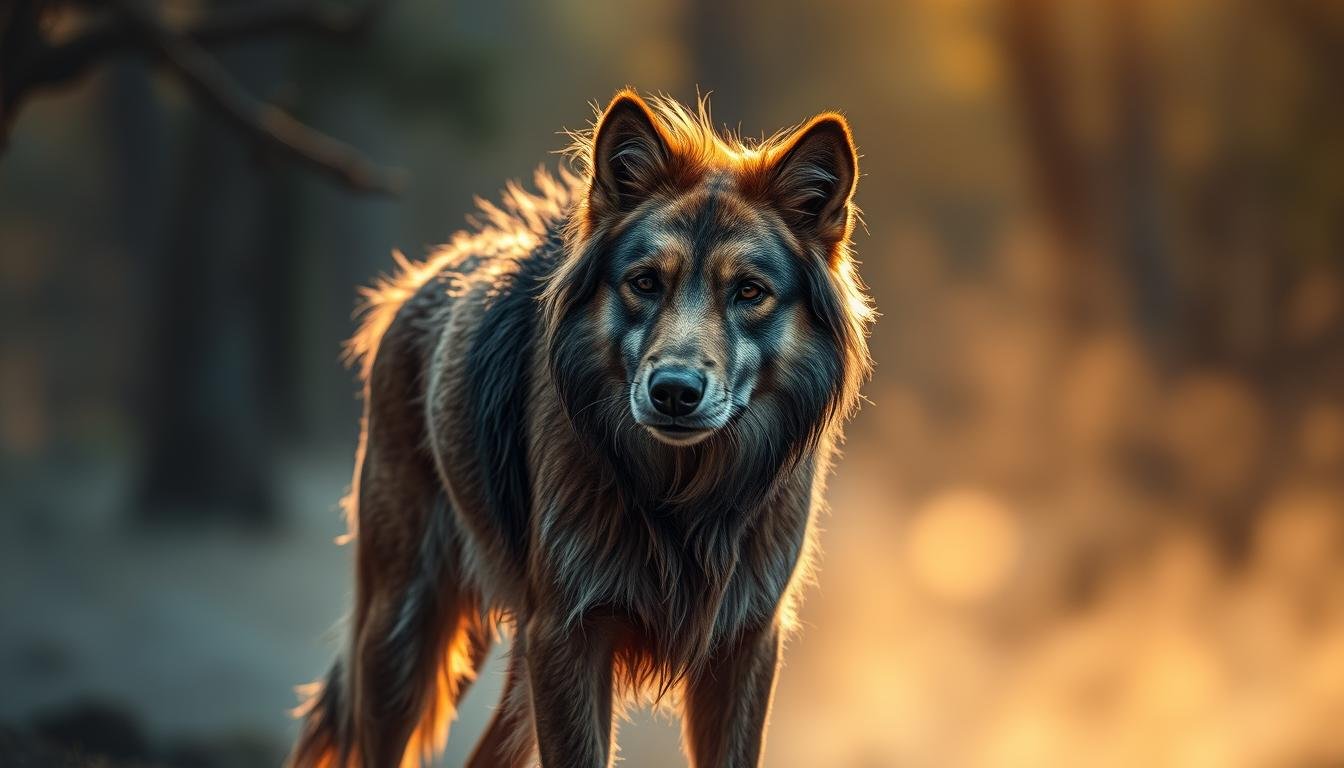
Did you know that grasping a wild dog breed‘s heritage can profoundly affect their behavior and care? Recognizing and embracing a dog’s wild side can revolutionize pet ownership.
Exploring the wilder aspects of our canine friends requires a deep dive into their exotic origins. This understanding is key to grasping their contemporary behavior.
By delving into their wild ancestry, pet owners can enhance care and fortify their connection with their pets.
Key Takeaways
- Understanding a dog’s wild heritage is vital for their behavior and care.
- Embracing the wild nature of dogs can enhance the pet-owner bond.
- Recognizing exotic dog breeds’ origins can guide their modern care.
- Unleashing the wilder side of dogs necessitates acknowledging their wild roots.
- Better care and stronger bonds are attainable by embracing a dog’s wild nature.
Understanding Your Dog’s Wild Heritage
Dogs are often seen as man’s best friend, but they have a wild side. This side comes from their journey from wolves to dogs. This journey has shaped their genes and behavior.
The Evolutionary Journey from Wolf to Dog
The change from wolves to dogs shows how adaptable these animals are. Research indicates dogs were domesticated between 15,000 to 30,000 years ago. This happened in various places.
Key Genetic Differences
Dogs and wolves share a common ancestor but have different genes. Dogs can handle starches better and have changes in digestion and behavior genes.
Retained Wolf Behaviors
Many wolf behaviors are seen in dogs today. As Raymond Coppinger, a leading dog behavior expert, says,
“Dogs are not just domesticated wolves; they are a unique species with their own characteristics.”
Instinctual Behaviors That Persist in Modern Dogs
Modern dogs show behaviors from their wolf ancestors. These include hunting and scavenging, as well as pack mentality.
Hunting and Scavenging
Dogs chase small prey due to their genetic makeup. This shows their hunting instincts are strong.
Pack Mentality
Dogs’ pack mentality comes from their wolf roots. They need social interaction and a hierarchy to thrive.
Knowing about these wild traits helps dog owners care for their pets better. It meets their instinctual needs and improves their happiness.
Signs Your Dog Needs More “Wild” in Their Life
It’s vital to recognize when your dog needs more wild activities for their well-being. Dogs that lack mental and physical stimulation often show behaviors not typical of their breed or temperament.
Behavioral Indicators of Understimulation
Dogs that don’t get enough physical and mental stimulation may exhibit certain behavioral issues. These can include destructive behaviors, excessive barking, or whining.
Destructive Behaviors
Dogs that are bored or understimulated may chew furniture or dig up the yard. This is a sign of their need for more activity.
Excessive Barking or Whining
Excessive barking or whining often indicates that your dog is not getting enough exercise or mental stimulation.
Physical Symptoms of Domestication Stress
Understimulation can also manifest physically in dogs. This can include weight issues and lethargy.
Weight Issues
Some dogs may become overweight due to lack of exercise, while others may lose weight due to stress or anxiety.
Lethargy and Depression
Lethargy and depression are common in dogs that are not getting enough physical and mental stimulation.
| Signs | Description |
|---|---|
| Destructive Behaviors | Chewing furniture, digging up the yard |
| Excessive Barking/Whining | Sign of lack of exercise or mental stimulation |
| Weight Issues | Overweight or underweight due to lack of exercise or stress |
| Lethargy/Depression | Lack of physical and mental stimulation |
The Benefits of Embracing Your Wilder Dog
Embracing your dog’s wild nature is more than just letting them roam free. It’s about fostering a healthier, happier pet. By connecting with their natural instincts, you unlock numerous benefits that boost their well-being.
Improved Mental Health and Reduced Anxiety
Engaging in natural activities with your dog can greatly improve their mental health. Reducing anxiety and stress, these activities bring a sense of calm and well-being. Allowing your dog to explore and interact with their environment can be incredibly therapeutic.
Enhanced Physical Fitness and Longevity
Embracing your dog’s wild side often means more physical activity. This can lead to enhanced physical fitness and potentially a longer life. Activities like running, swimming, and playing fetch not only burn energy but also strengthen muscles and improve heart health.
Stronger Human-Canine Bond
A stronger bond between you and your dog can be fostered through natural activities. These activities promote trust and understanding.
Trust Building Through Natural Activities
Activities that mimic wild behaviors, such as tracking or hunting games, can build trust. This trust is key to a strong, healthy relationship.
Communication Improvements
Engaging in natural activities with your dog also improves communication. Understanding their body language and vocal cues becomes easier. This leads to a more harmonious coexistence.
Creating a Natural Diet Plan
The journey to a wilder dog starts in the kitchen, focusing on natural, nutrient-rich foods. A well-crafted diet plan is key for dogs that reflect their wild ancestors’ spirit.
Raw Feeding Basics and Safety
Raw feeding is a favorite among dog owners wanting to return to their pets’ natural diet. It involves feeding dogs uncooked meat, bones, and other raw foods.
Protein Sources and Ratios are essential in a raw diet. Dogs need a diet rich in protein, usually from animal sources. The ideal protein ratio depends on the dog’s age, breed, and activity level.
- Muscle meat (e.g., chicken, beef, turkey)
- Organ meats (e.g., liver, kidney)
- Bones and cartilage
Handling and Storage Precautions are vital to avoid bacterial contamination. Always handle raw meat safely, and store it properly in sealed containers at the right temperatures.
Balanced Nutrition for the Modern Wild Dog
A balanced diet for your wilder dog must include the right mix of nutrients. This includes not just protein, but also healthy fats, vitamins, and minerals.
Transitioning from Commercial to Natural Foods
Switching your dog from commercial to natural foods should be done gradually to prevent digestive upset.
Gradual Introduction Methods involve mixing a small amount of the new food with their current diet, gradually increasing the proportion over time.
Monitoring Health Changes is critical during this transition. Watch for signs of digestive upset, allergic reactions, or other health issues, and adjust the diet as needed.
Wild Exercise: Beyond the Daily Walk
There are many ways to exercise your dog’s wild side beyond the usual walk. Engaging in various physical and mental activities not only boosts their health but also deepens your bond.
Scent-Based Activities and Tracking Games
Scent work is a great way to engage your dog’s sense of smell and provide mental stimulation. Hide treats or toys with a strong scent for your dog to find. This activity mimics hunting and can be very rewarding for dogs.
Natural Obstacle Courses and Parkour
Setting up a natural obstacle course with logs, hills, and tunnels can be a fun and challenging workout for your dog. Parkour training can also be adapted for dogs, teaching them to navigate complex environments.
Swimming and Water Activities
Swimming is an excellent low-impact exercise for dogs, perfect for those with joint issues. Introducing your dog to water activities can be a great way to provide exercise and fun.
Safety Considerations
When engaging in water activities, it’s vital to ensure your dog’s safety. Always supervise your dog near water, and consider using a dog life jacket for added security.
Introducing Water-Hesitant Dogs
For dogs hesitant around water, gradual introduction is key. Start with shallow water and positive reinforcement to help build their confidence.
| Exercise Type | Benefits | Safety Tips |
|---|---|---|
| Scent-Based Activities | Mental Stimulation, Mimics Hunting | Supervise, Use Positive Reinforcement |
| Natural Obstacle Courses | Physical Exercise, Improves Agility | Ensure Course Safety, Gradually Increase Difficulty |
| Swimming and Water Activities | Low-Impact Exercise, Fun | Supervise, Use Dog Life Jacket if Necessary |
Enrichment Activities That Stimulate Natural Instincts
Enrichment activities are vital for stimulating a dog’s natural instincts, connecting them to their wild heritage. Dogs, including exotic and unique dog breeds, have innate behaviors that need engagement. This ensures their mental and physical well-being.
Hunting and Prey-Drive Games
Hunting and prey-drive games are excellent for stimulating a dog’s natural hunting instincts. These activities provide physical exercise and mental stimulation.
Flirt Poles and Lure Coursing
Flirt poles and lure coursing mimic prey, encouraging dogs to chase and catch. These games are a hit with high-energy breeds.
Hide and Seek Variations
Hide and seek games can be adapted to suit a dog’s prey drive by hiding treats or toys that mimic prey. This activity challenges the dog to use their sense of smell and problem-solving skills.
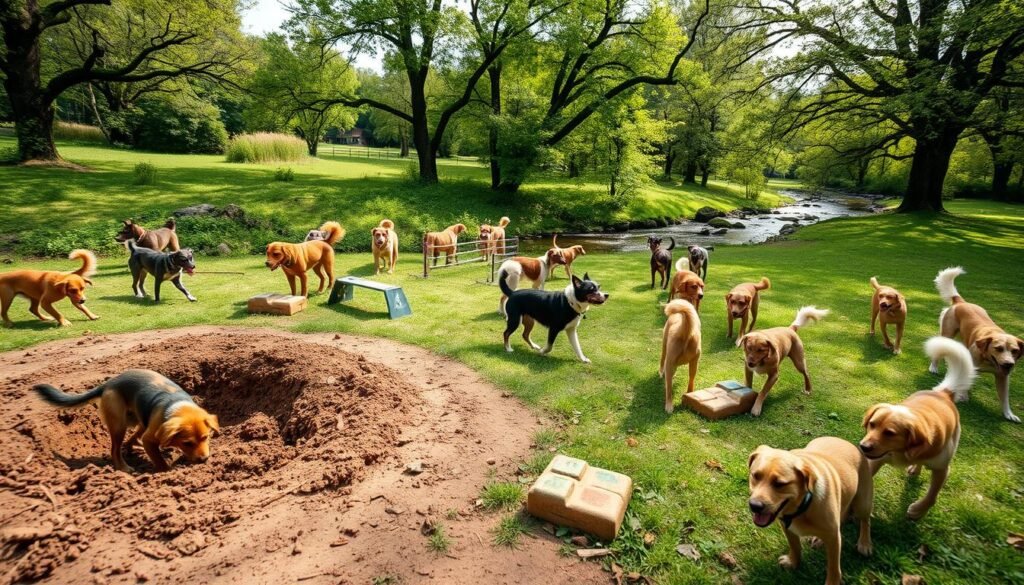
Digging Zones and Exploration Areas
Creating designated digging zones satisfies a dog’s natural instinct to dig. Exploration areas provide them with new environments to discover.
Social Play with Other Dogs
Social play is essential for dogs, allowing them to interact with others of their kind. Understanding play styles and managing group dynamics are key for a harmonious play experience.
Reading Play Styles
Recognizing whether a dog is a rough player or prefers more gentle interactions is important. It helps in arranging compatible playmates.
Managing Group Dynamics
Effective management of group dynamics involves monitoring the behavior of all dogs involved. Intervening when necessary is important to prevent conflicts.
Training Techniques for the Wilder Dog
Training a wilder dog demands a special approach. It must balance discipline with the freedom to express their natural instincts. Dogs with a strong wild heritage need training methods that respect their innate behaviors while providing necessary boundaries.
Balancing Structure with Freedom
Effective training for wilder dogs requires finding a balance. This balance is between structured obedience and the freedom to engage in natural behaviors. It’s essential for maintaining the dog’s mental and physical health.
Using Natural Rewards and Motivators
Natural rewards and motivators are key in training wilder dogs. These can include food-based rewards and play or chase rewards. They tap into the dog’s instinctual behaviors.
Food-Based Rewards
Using food as a reward is highly effective. It aligns with the dog’s natural foraging behavior. High-value treats can be used to reinforce desired behaviors.
Play and Chase Rewards
Play and chase activities tap into a dog’s prey drive. They make powerful motivators. Incorporating these into training sessions can enhance engagement and responsiveness.
Problem-Solving Through Instinct Channeling
Channeling a dog’s instincts into positive behaviors is a key aspect of their training. This involves redirecting unwanted behaviors into appropriate outlets.
Redirecting Unwanted Behaviors
Redirecting behaviors such as excessive barking or digging into more acceptable activities can be achieved through consistent training and positive reinforcement.
Creating Appropriate Outlets
Providing appropriate outlets for a dog’s natural behaviors is essential. This can include creating digging zones or engaging in scent-based activities.
| Training Technique | Description | Benefits |
|---|---|---|
| Food-Based Rewards | Using high-value treats to reinforce desired behaviors | Enhances obedience, taps into foraging instinct |
| Play and Chase Rewards | Incorporating play into training sessions | Boosts engagement, leverages prey drive |
| Redirecting Unwanted Behaviors | Channeling undesirable behaviors into acceptable activities | Reduces problem behaviors, enhances trainability |
By incorporating these training techniques, owners can better understand and manage their wilder dogs. This fosters a more harmonious and balanced relationship.
Creating a Wild-Friendly Home Environment
Creating a home environment that resonates with your dog’s wild heritage is key to their well-being. It involves making conscious decisions about both indoor and outdoor spaces. This ensures their natural behaviors are catered to.
Safe Indoor Spaces for Natural Behaviors
Indoor areas should be dog-proofed for safe exploration. This includes securing toxic substances, removing hazardous objects, and creating cozy den-like spaces for rest.
Yard Modifications for Exploration and Play
Outdoor spaces can be modified to encourage exploration and play. Considerations include:
- Secure fencing to prevent escape
- Natural elements like logs and rocks for interaction
- Areas for digging and sensory exploration
Secure Fencing Considerations
A sturdy fence is essential to keep your dog safe. The height and material should be chosen based on your dog’s breed and behavior. This is critical for dogs with wilder dog characteristics.
Natural Elements and Textures
Incorporating natural elements like wood, stone, and plants enriches your dog’s environment. These elements provide various textures and smells that stimulate their senses.
Sensory Enrichment in the Home
Sensory enrichment is vital for a dog’s mental health. This can be achieved by introducing different smells, sounds, and textures into their environment. It’s beneficial for unique dog breeds with high energy levels.
| Sensory Stimulation | Examples |
|---|---|
| Smell | Essential oils, herbs, interactive smell games |
| Sound | Music, nature sounds, white noise |
| Texture | Rugs, mats, interactive texture toys |

Characteristics of a Wilder Dog and Breed Considerations
Exploring the wild dog breed reveals a complex interplay of traits shaped by their evolutionary history. The characteristics of a wilder dog are deeply rooted in their ancestral lineage. This lineage influences their behavior, physical attributes, and needs.
Primitive and Ancient Breeds
Primitive and ancient breeds have retained many of their original traits. This makes them ideal examples of wilder dogs. They often exhibit strong instincts and physical characteristics that are reminiscent of their wild ancestors.
Siberian Husky and Northern Breeds
Breeds like the Siberian Husky are known for their endurance and strong prey drive. These traits are characteristic of their northern heritage. Their thick coats and robust build are adaptations to the harsh, cold climates of their origins.
Basenji and African Breeds
The Basenji, with its unique yodeling bark, is an example of an ancient breed that has retained its distinctiveness. African breeds often possess high energy levels and strong hunting instincts. These reflect their historical use for tracking and hunting.
High-Energy Working Breeds
High-energy working breeds are another category of wilder dogs that require special consideration. These breeds were developed for their ability to perform demanding tasks. They often have high exercise needs.
Border Collies and Herding Dogs
Border Collies are renowned for their intelligence and herding ability. They require both physical and mental stimulation. Their high energy levels and strong work ethic make them a prime example of a high-energy working breed.
Terriers and Earth Dogs
Terriers were bred for their ability to hunt and kill vermin. They showcase their strong prey drive and tenacity. Their energetic nature and need for activity make them suitable for active owners.
Specialized Care Requirements
Understanding the specialized care requirements of wilder dog breeds is essential for their well-being. This includes providing appropriate diets, exercise, and mental stimulation tailored to their breed-specific traits.
| Breed | Energy Level | Special Needs |
|---|---|---|
| Siberian Husky | High | Regular exercise, cold climate adaptation |
| Basenji | Medium | Regular grooming, high energy activities |
| Border Collie | High | Mental stimulation, intense physical exercise |
By understanding and catering to the unique characteristics and needs of wilder dog breeds, owners can provide a more fulfilling and healthy life for their pets.
Balancing Wild Nature with Social Expectations
It’s vital to find a balance between your dog’s wild instincts and social expectations for a harmonious relationship. As a dog owner, understanding your dog’s wild nature is key. Yet, it’s equally important to teach them to behave appropriately in public.
Teaching Appropriate Public Behavior
Teaching your dog to behave in public requires training them to respond to commands and remain calm amidst distractions. Consistent training and positive reinforcement are essential for this.
Managing Prey Drive in Urban Settings
In urban settings, managing your dog’s prey drive is critical. They may encounter small animals or other distractions. Leash training techniques and distraction training are effective.
Leash Training Techniques
Leash training teaches your dog to walk beside you without pulling. This is achieved through positive reinforcement and consistent practice.
Distraction Training
Distraction training exposes your dog to various distractions while teaching them to focus on you. This includes other dogs, people, and noises.
| Training Technique | Description | Benefits |
|---|---|---|
| Leash Training | Teaching your dog to walk on a leash without pulling | Improved walking behavior, reduced risk of escape |
| Distraction Training | Training your dog to focus on you despite distractions | Improved focus, reduced reactivity to distractions |
Communicating Your Dog’s Needs to Others
It’s essential to communicate your dog’s needs to others to ensure they are understood and respected. This involves educating others about your dog’s temperament and needs.

Common Challenges When Unleashing Your Wilder Dog
Deciding to unleash your wilder dog comes with several challenges. Embracing their wild nature can enrich your bond. Yet, it’s vital to be aware of the hurdles ahead.
Addressing Increased Energy Levels
Managing your dog’s heightened energy is a major challenge. Dogs with a strong prey drive or high energy need more exercise and mental challenges.
Managing New Behaviors
As your dog connects with their wild side, new behaviors may surface. This includes changes in how they vocalize or mark their territory.
Vocalization Changes
Some dogs become more vocal, expressing excitement or alerting you to prey. It’s a natural way for them to communicate.
Territory Marking
Territory marking becomes more evident. This includes urinating in specific spots or scent marking objects.
Finding Balance Between Wild and Domestic
It’s essential to balance your dog’s wild nature with domestic harmony. This balance is key to a happy home life.
Setting Boundaries
Clear boundaries are critical. They ensure your dog’s wild behaviors don’t disrupt home or public life. Set rules for acceptable behavior at home and out.
Knowing When to Intervene
Knowing when to step in is equally important. Redirect their energy into suitable activities or provide extra training when needed.
| Challenge | Solution |
|---|---|
| Increased Energy Levels | More exercise and mental stimulation |
| New Behaviors | Redirecting energy, additional training |
| Vocalization Changes | Training, positive reinforcement |
| Territory Marking | Spaying/neutering, designated marking areas |
Understanding these challenges and using the right strategies can help your dog flourish. This way, you can maintain a balanced and harmonious home life.
Conclusion: Living Harmoniously with Your Wilder Dog
By recognizing and supporting your dog’s wilder dog temperament, you can deepen your connection. This creates a more harmonious living space. We’ve discussed various ways to understand and care for your dog’s wild side, from diet to enrichment activities.
Embracing your dog’s wild heritage goes beyond just the right care. It’s about grasping their needs and instincts. This understanding is key for wild dog care, ensuring your dog’s happiness and health.
Living in harmony with your wilder dog means balancing their natural behaviors with domestic life. By applying the strategies we’ve covered, you can enrich your dog’s life. This will also strengthen your bond, leading to a more harmonious coexistence.
In conclusion, embracing your dog’s wild nature is a journey. It requires patience, understanding, and the right approach. By doing so, you’ll not only enhance your dog’s life but also strengthen your bond, leading to a more harmonious coexistence.
Sources
This article draws from a range of studies and expert opinions. For more information, please see the following sources:
- American Kennel Club: Raw Feeding Dogs
- PetMD: Dietary Needs of Dogs
- Whole Dog Journal: Tapping into Your Dog’s Instincts
- Dogster: Enrichment Activities for Dogs
These resources offer deep insights into dog behavior, nutrition, and training. They support the concepts discussed in this article.
FAQ
What are the characteristics of a wilder dog breed?
Wilder dog breeds show traits like strong prey drive and high energy. They have a natural urge to roam or hunt. Examples include the Siberian Husky and the Alaskan Malamute, both ancient breeds.
How can I provide a natural diet plan for my exotic dog?
Feeding your exotic dog a natural diet means raw, nutrient-rich foods. This includes meats, fruits, and vegetables. It’s key to research their nutritional needs and gradually introduce new foods to avoid digestive problems.
What are some unique exercise methods for high-energy working breeds?
High-energy breeds need exercise that challenges them physically and mentally. Activities like scent-based games, natural obstacle courses, and swimming are great. These keep their instincts sharp and provide the needed stimulation.
How can I create a wild-friendly home environment for my rare dog breed?
To make your home wild-friendly, create a safe space for your dog to explore. Modify your yard with areas for digging and sensory activities. This encourages natural behaviors.
What are some effective training techniques for wilder dogs?
Training wilder dogs requires a balance of structure and freedom. Use natural rewards and focus on positive behaviors. Redirect unwanted actions and provide outlets for their energy and instincts.
How can I manage my dog’s prey drive in urban settings?
Managing prey drive in cities involves training, socialization, and management. Teach recall commands, use positive reinforcement, and avoid high prey areas. This helps control their instincts.
What are some common challenges when unleashing my wilder dog, and how can I address them?
Challenges include increased energy and new behaviors. Finding a balance between wild and domestic is key. Set boundaries, provide regular exercise and mental stimulation, and intervene when needed.
How can I balance my dog’s wild nature with social expectations?
Balancing wild nature with social expectations requires training and socialization. Teach your dog to behave in public, manage their prey drive, and communicate their needs. This helps meet social expectations while honoring their wild side.